If you ask ten different Italians what makes a meal "authentic," you'll likely get ten different answers — most of which involve their grandmother's specific way of folding tortellini. But beyond the nostalgia, authentic Italian cuisine is governed by a strict philosophy: respect for the ingredient.
At Due' Cucina, the best Italian restaurant serving Seattle and other national locations, we believe Italian food isn't just about recipes; it's about a commitment to quality that starts long before the pan hits the heat. Here is your essential checklist for identifying an authentic Italian restaurant, with a look behind the scenes of how we apply these standards to our own menu.1. The Flour Power: Is It Extruded Fresh?
In Italy, flour is graded by how finely it is milled, and the way it is made is just as important as the grain itself. If a restaurant isn’t clear about where their grains come from — or only serves dry pasta that comes in a package — pay attention.
- The Standard: Real pasta makers put high-quality semolina or “00” flour first. We make pasta every day at Due’ Cucina’s Pasta Lab using sustainable, regenerative-agriculture semolina flour that’s good for you and for the environment.
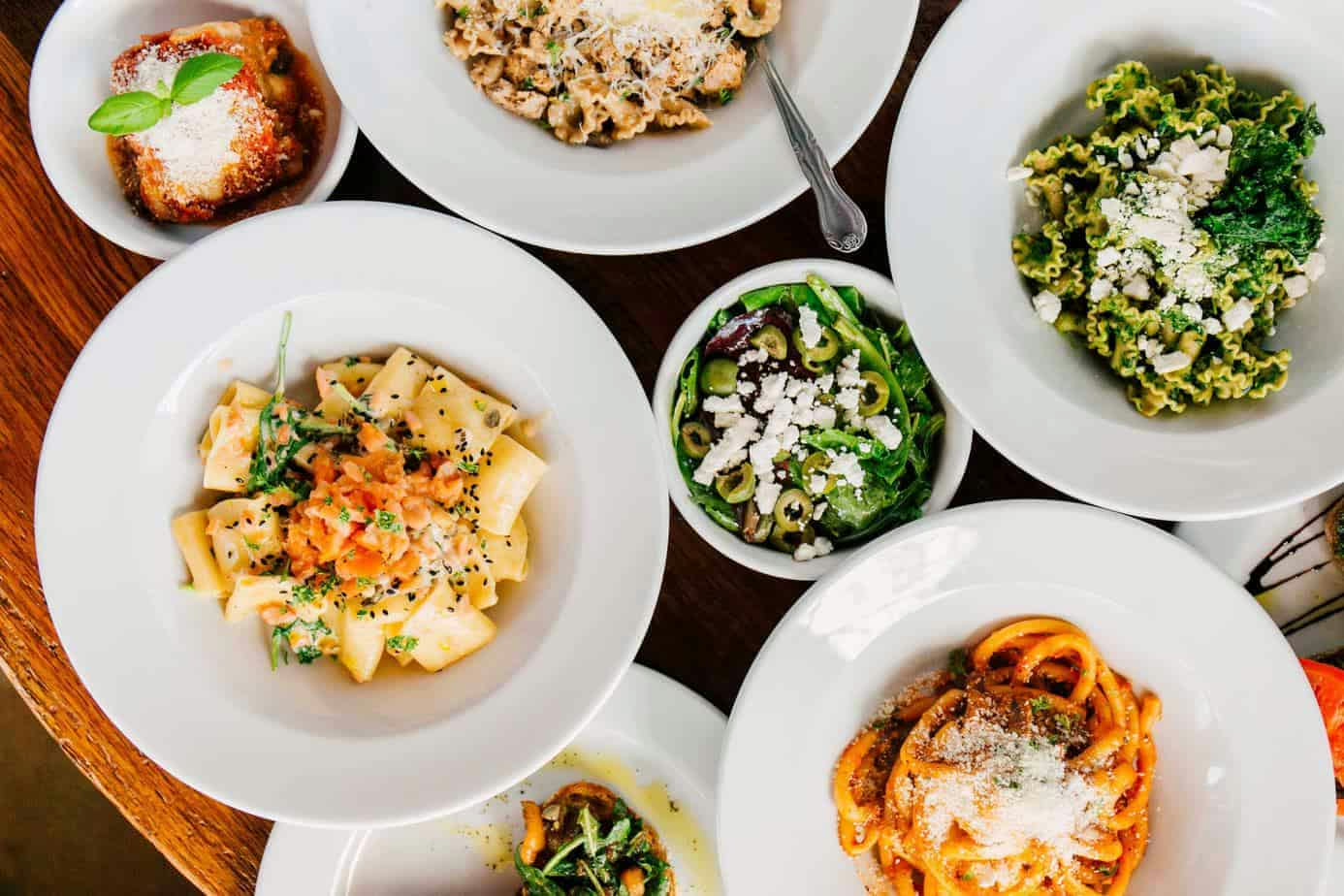
- The Texture: The surface of freshly extruded pasta is porous, which helps it “grab” the sauce. The shape of our ridged Fusilloni, hollow Bucatini, or unique Creste di Gallo should help hold the sauce it goes with.
- Authenticity: Restaurants that treat their alternative grains with the same care as their wheat. Our GF Casarecce — made from rice, corn, potato starch, and xanthan gum — is produced using the same artisanal extrusion method as our classic wheat pasta.
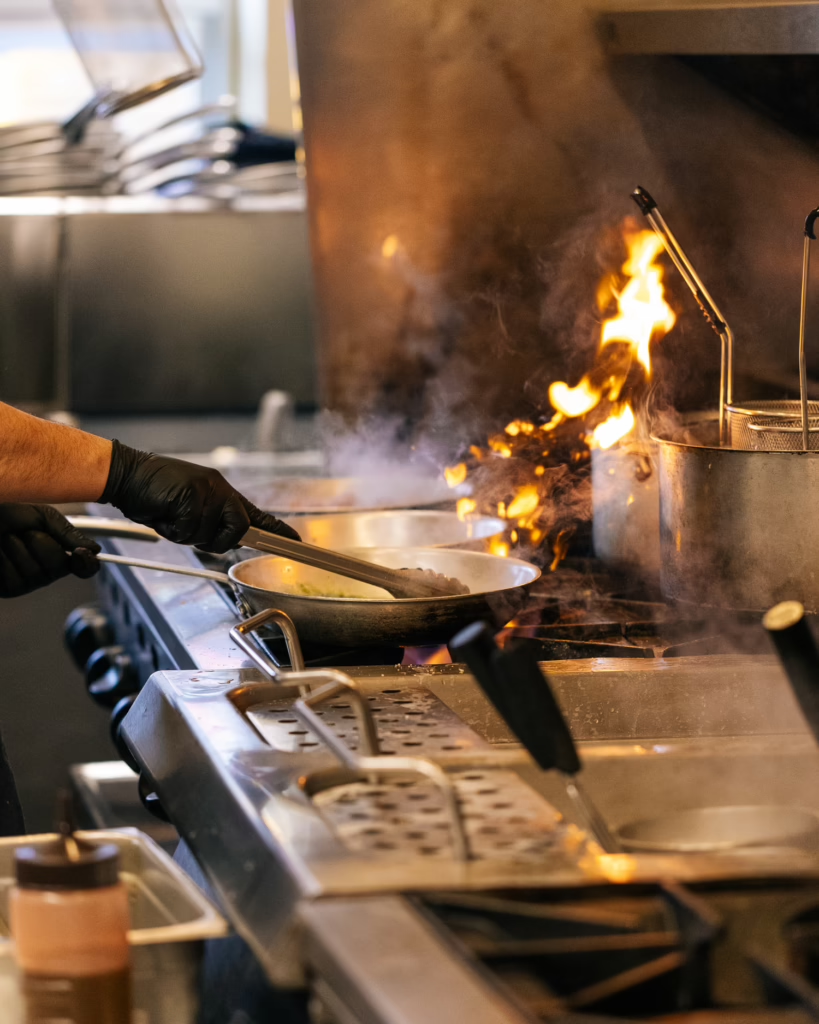
Bronze-die extrusion gives pasta the rough, porous surface that lets sauce cling — the single biggest tell of an authentic Italian kitchen.
2. The DOP and IGP Seals of Approval
In the world of Italian food, “faking it” is a multi-billion dollar industry. To make sure you’re getting the real deal, look for the acronyms DOP (Denominazione di Origine Protetta) and IGP (Indicazione Geografica Protetta). These aren’t just fancy letters — they’re legal protections guaranteeing a product was made in a specific region using traditional methods.
On Our Menu
- Pecorino Romano DOP: Used in our Carbonara and Cacio & Pepe, this sheep’s milk cheese provides a sharp, salty depth that generic “Italian hard cheese” simply cannot replicate.
- Parmigiano Reggiano DOP: We use 24-month aged Parmigiano on our Polpette (meatballs). This aging process creates those signature crunchy protein crystals and a complex, nutty flavor.
- Guanciale: A true Roman Carbonara must use house-cured guanciale (pork cheek), not bacon. The fat renders differently, creating a silky emulsion with the pasture-raised eggs.
“Authenticity isn’t about being fancy. It’s about being honest — about knowing where your grain was grown and how much love went into the sauce.”
3. The "Al Dente" Standard (And No-Cream Rules)
If your pasta arrives soft and mushy, the kitchen has failed a fundamental test. Al dente (literally “to the tooth”) means the pasta should have a slight resistance when you bite into it.
Furthermore, look at the ingredients in the “creamy” sauces. A common red flag in Italian dining is the use of heavy cream in dishes where it doesn’t belong — such as Carbonara and Cacio & Pepe.
| Dish | Authentic | Red Flag |
|---|---|---|
| Cacio & Pepe | Pecorino, pasta water, pepper | Heavy cream |
| Carbonara | Egg yolks, guanciale, Pecorino | Cream, bacon, peas |
| Pasta texture | Firm bite, al dente | Soft, mushy |
| Bolognese | Slow-simmered ragù on tagliatelle | Spaghetti & meatballs |
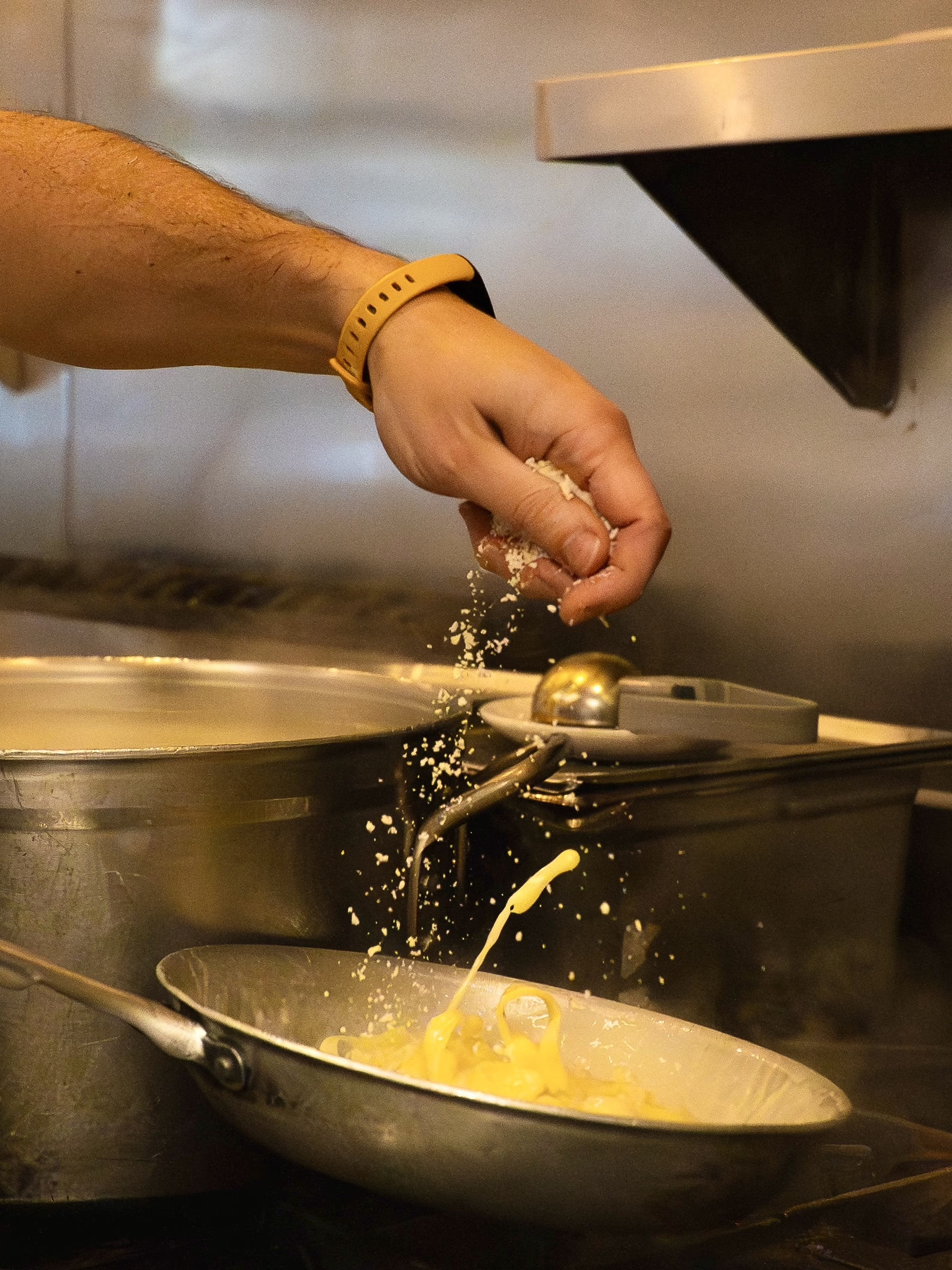
The Test: Look at the Cacio & Pepe. An authentic version, like ours, is “creamy but with no cream.” The texture comes entirely from the emulsification of aged Pecorino Romano DOP, pasta water, and black pepper.
4. Regional Specificity
Italy is a mosaic of 20 regions, each with its own culinary identity. A “generic” Italian menu is often a sign of a kitchen that lacks focus. Authentic restaurants incorporate food culture into where their recipes come from.
Our Regional Roots
- Rome: Our Suppli al Telefono (crispy rice croquettes with gooey caciocavallo cheese) and Carbonara are direct nods to the Eternal City.
- Bologna: Our Lasagna alla Bolognese uses the traditional green, spinach-infused egg pasta and a slow-simmered ragù — just as you’d find in Emilia-Romagna.
- Sicily: Look for the Taggiasca olives in our salads or the Sicilian Cannoli for dessert.
5. Integrity of the "Comfort" Dishes
“Italian Comfort Food” shouldn’t mean “heavy and greasy.” It should mean soul-warming and house-made.
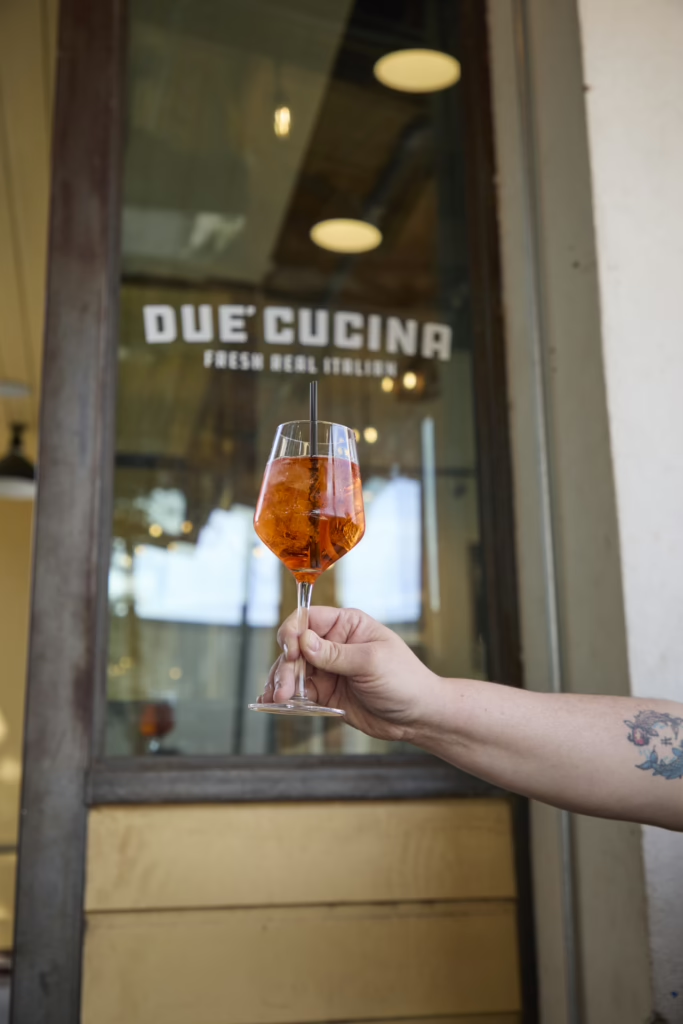
Aperol Spritz — Italy’s iconic aperitivo cocktail, whose bright citrus and gentle bitterness make it the perfect companion to pasta, whether to start the evening or alongside dinner.
- The Meatballs (Polpette): Are they pre-frozen? You can tell by the texture. Ours are seasoned with thyme, garlic, and a hint of nutmeg, then simmered in rich tomato sauce.
- The Bread: Bread is the opening act. Our Artisan Focaccia is baked fresh every morning with just four ingredients — flour, yeast, water, and extra virgin olive oil. If a restaurant serves a basket of garlic bread full of preservatives and dripping in synthetic butter, they’re catering to stereotypes rather than traditions.
6. Seasonality and Freshness
If you see a “Fresh Peach Salad” on the menu in the dead of January, be skeptical. Authentic Italian cooking is seasonal. While some staples — like our Short Ribs Ragù braised in Chianti — are year-round favorites, the supporting ingredients should feel fresh.
We prioritize pasture-raised eggs, antibiotic-free meats, and sustainably raised beef. When the ingredients are this high-quality, the chef doesn’t need to “hide” them under layers of salt or heavy sauces.
Key Takeaways
- • Look for fresh, bronze-extruded pasta made on-site — the single biggest authenticity tell.
- • Watch for DOP and IGP cheeses and cured meats on the menu.
- • Real Carbonara and Cacio & Pepe contain no cream, ever.
- • Authentic kitchens are regional, seasonal, and ingredient-forward.
- • If the comfort dishes are house-made, the rest of the kitchen probably is too.
At Due’ Cucina, we didn’t just want to open a restaurant — we wanted to transport the Italian Pastaio culture to the area. Beyond our in-house dining options, you may also choose our Italian catering near Kirkland and at our other locations served.
Authenticity isn’t about being fancy; it’s about being honest. It’s about knowing where your grain was grown and how much love went into the sauce. Order dine-in, takeout, or cater from one of our many locations.