In the heart of every Italian kitchen, there is a specific sound that lets you know something special is happening. It is the rhythmic, steady chop of a chef's knife against a heavy wooden board and the gentle sizzle of cold-pressed olive oil hitting a warm pan. At Due' Cucina, an Italian restaurant serving Seattle & other locations, these sounds are our daily anthem.
Many people have fallen into the habit of settling for the shortcut of jarred, mass-produced sauces. While these glass jars offer convenience, they often sacrifice the very essence of what makes Italian cuisine famous around the world: vitality, nutrition, and honest flavor.
Choosing fresh Italian sauce isn't just about being a "foodie." It is a commitment to your palate. When you understand the labor and the ingredients that go into a scratch-made sauce, it becomes impossible to go back to the supermarket aisle.
1. Living Flavor vs. The "Dead" Jar
If you take a moment to look at the back of a typical supermarket pasta sauce jar, you will probably see a list of ingredients that looks more like a chemistry project than a recipe. To keep those jars sitting on shelves for months or even years, the sauces must go through extreme heat processing called pasteurization. While this makes the product shelf-stable, it also kills off the delicate nuances and bright notes of the ingredients.
Fresh sauce, like the ones we simmer every single day at Due’ Cucina, is what we like to call “living.” When we use San Marzano tomatoes, fresh-picked basil, and authentic extra virgin olive oil, those ingredients haven’t been muted by high-heat preservation. You can actually taste the brightness of the tomato’s natural acidity, the peppery kick of real basil, and the buttery, grassy finish of high-quality oil.
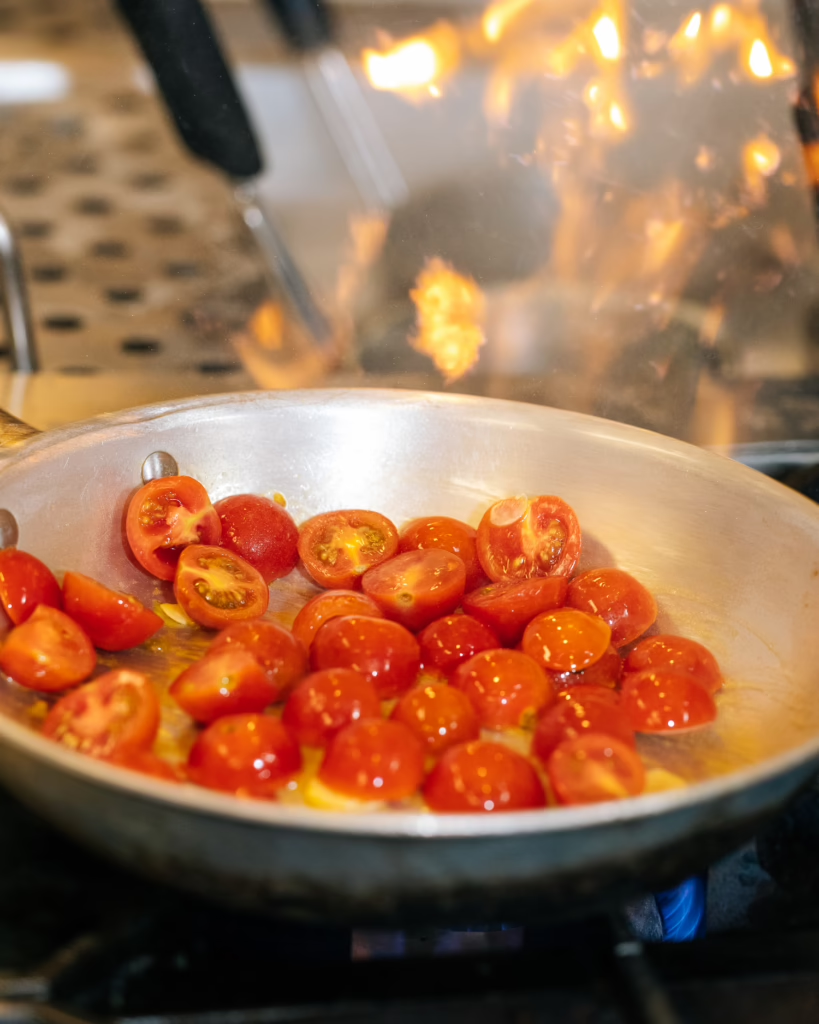
Real ingredients, no shortcuts — fresh tomatoes, fresh basil, and extra virgin olive oil are the only foundation a sauce needs.
2. The Hidden Culprits: Sugar and Ultra-Processing
We let the ingredients do their own heavy lifting as part of our emphasis on food culture. One of the biggest differences between fresh and jarred sauce is what you don’t see on the label in big bold letters. Most commercial brands pack their jars with added sugars. Low-quality, over-processed tomatoes often turn bitter or bland during the canning process. Sugar is the easiest way for a factory to mask that bitterness and make the sauce “palatable” to a mass audience.
The natural caramelization of slow-cooked onions and the inherent sugars in vine-ripened tomatoes play a role in sweetness. Beyond sugar, jarred sauces often use thickeners like cornstarch, potato starch, or various gums. We let the sauce simmer and thicken on its own terms. This results in a texture that actually clings to your pasta rather than sliding off in a gel-like clump at the bottom of your bowl.
3. Fresh Herbs Make A Difference
Fresh herbs are the aromatic backbone of real Italian cooking. Those oils from these herbs are where the scent, the flavor, and the benefits live. When you dry an herb to put it in a jarred sauce, those oils evaporate. At Due’ Cucina, we use herbs the way they were intended. When we stir fresh basil into our sauces at the very last moment, those essential oils are released directly onto your plate. You aren’t just eating; you’re having a real sensory experience. The smell of fresh basil hitting hot pasta is something a factory simply cannot replicate.
4. Authenticity & Sourcing You Can Trust
As for a scratch kitchen, we believe in making sure that the sauce is fresh since it’s important to us what happens to the food we serve on our menu. Jarred sauces that are ultra-processed usually utilize “commodity” vegetables and fruits.
“You can’t fake a four-hour simmer. You can taste the patience in every spoonful.”
5. The Nutritional Gap: Why Your Body Will Thank You
Many people ask if fresh sauce is actually healthier, or if it’s just a matter of taste. The answer is a resounding yes. While tomatoes are famous for Lycopene, a powerful antioxidant that supports heart health, the way you prepare the tomato matters.
The massive amounts of sodium and chemical preservatives (like calcium chloride) used in jarred versions can cause water retention and inflammation, which cancels out many of the benefits of the vegetables.
When you choose a fresh sauce from a kitchen that values health, you are getting:
- Real Vitamin C: Which is often destroyed by the intense heat of industrial canning.
- Controlled Sodium: We season for flavor, not to keep a product from spoiling on a shelf for three years.
- Heart-Healthy Fats: We use 100% extra virgin olive oil. Many jarred brands swap this out for cheap soybean or canola oil blends to save money, which changes the fat profile of your meal entirely.
6. The "Umami" of Slow Cooking
There is a depth of flavor in Italian cooking called “umami” — that savory, mouth-watering quality that makes you want a second bite. In a fresh kitchen, we achieve this through the Soffritto (the slow-cooked base of carrots, celery, and onions) and the long, slow simmer of bones or vegetables.
Jarred sauces try to cheat this process by adding yeast extracts or MSG-like additives. They want to trick your brain into thinking the sauce has been cooking for hours, when in reality, it was mixed in a vat in minutes. At Due’ Cucina, we believe the time we spend at the stove is a gift to our customers. You can taste the patience in every spoonful.
7. The Texture of the Sauce
Texture plays as crucial a role in sauces as taste does. I am sure that you have come across cases when you would order some pasta, but then be disappointed because the sauce was too thin or, quite oppositely, too thick to be enjoyable. Sauce should have what is called a “silky” texture.
In that way, being made of natural fats such as olive oil and natural tomato pectin, our sauce forms the perfect emulsion. This means that it perfectly covers each string of spaghetti and twist of fusilli pasta, becoming one with the pasta rather than being spread over it like a heavy blanket.
8. The Emotional Connection To What You Eat
Food is more than just nutrients; it’s also a way to remember and connect with people. A jar of sauce on a grocery store shelf doesn’t have a story. Someone who doesn’t care if you like your dinner made it. Every batch of sauce at Due’ Cucina makes them proud. When you eat our pasta, you are connecting with the food traditions of Rome, Tuscany, and Sicily. You can taste the hard work of a kitchen staff that cares about every ingredient.
Key Takeaways
- • Jarred sauce is pasteurized to last for years — that same heat strips out brightness, vitamins, and aroma.
- • Added sugar, starches, and cheap oils are how factories mask low-quality tomatoes.
- • Fresh herbs added at the end deliver oils and aroma a dried-and-jarred sauce can’t replicate.
- • Real umami comes from a soffritto and a slow simmer — not from yeast extract.