Outside Italy, "fresh" sounds like an upgrade. Inside Italy, nobody thinks dried pasta is second best. Most Italian families cook dried pasta on a normal weeknight and make fresh pasta for Sunday. The question isn't which is better. It's which one your sauce is asking for.
1. Two Different Doughs
- Dried pasta (pasta secca): Durum wheat semolina and water, pushed through a die and dried slowly. Bronze dies leave a rough, chalky surface that grabs sauce. Firm, springy, built to hold its bite.
- Fresh egg pasta (pasta all’uovo): Soft flour and eggs, rolled into thin sheets. Northern Italy’s tradition: tagliatelle, lasagne, ravioli, tortellini. Silky, tender, rich.
- Fresh flour-and-water pasta: Southern Italy’s tradition. Semolina and water, shaped by hand: orecchiette, cavatelli. Chewy and rustic.
“The dough decides the texture. The texture decides the sauce.”
2. Which Sauce Wants Which Pasta
- Butter, cream and meat ragù → fresh egg pasta. The soft, porous surface soaks up rich sauces. That’s why Bologna serves ragù on tagliatelle.
- Olive oil, tomato and seafood → dried pasta. Its firm bite stands up to lighter, looser sauces without going limp.
- Chunky vegetable and sausage sauces → short, ridged shapes, fresh or dried, with places for the pieces to hide.
A good rule: delicate pasta for rich sauces, sturdy pasta for bright ones.
3. Cooking Fresh Pasta at Home
- Use lots of water, salted well.
- Watch the clock. Fresh pasta cooks in 2 to 4 minutes, not 10. Taste early.
- Never rinse it. The surface starch is what helps the sauce cling.
- Finish it in the pan. Toss the pasta with the sauce and a splash of cooking water for the last minute.
- Store it cold. Keep fresh pasta in the fridge and cook it within a couple of days, or freeze it.
4. From Our Kitchen
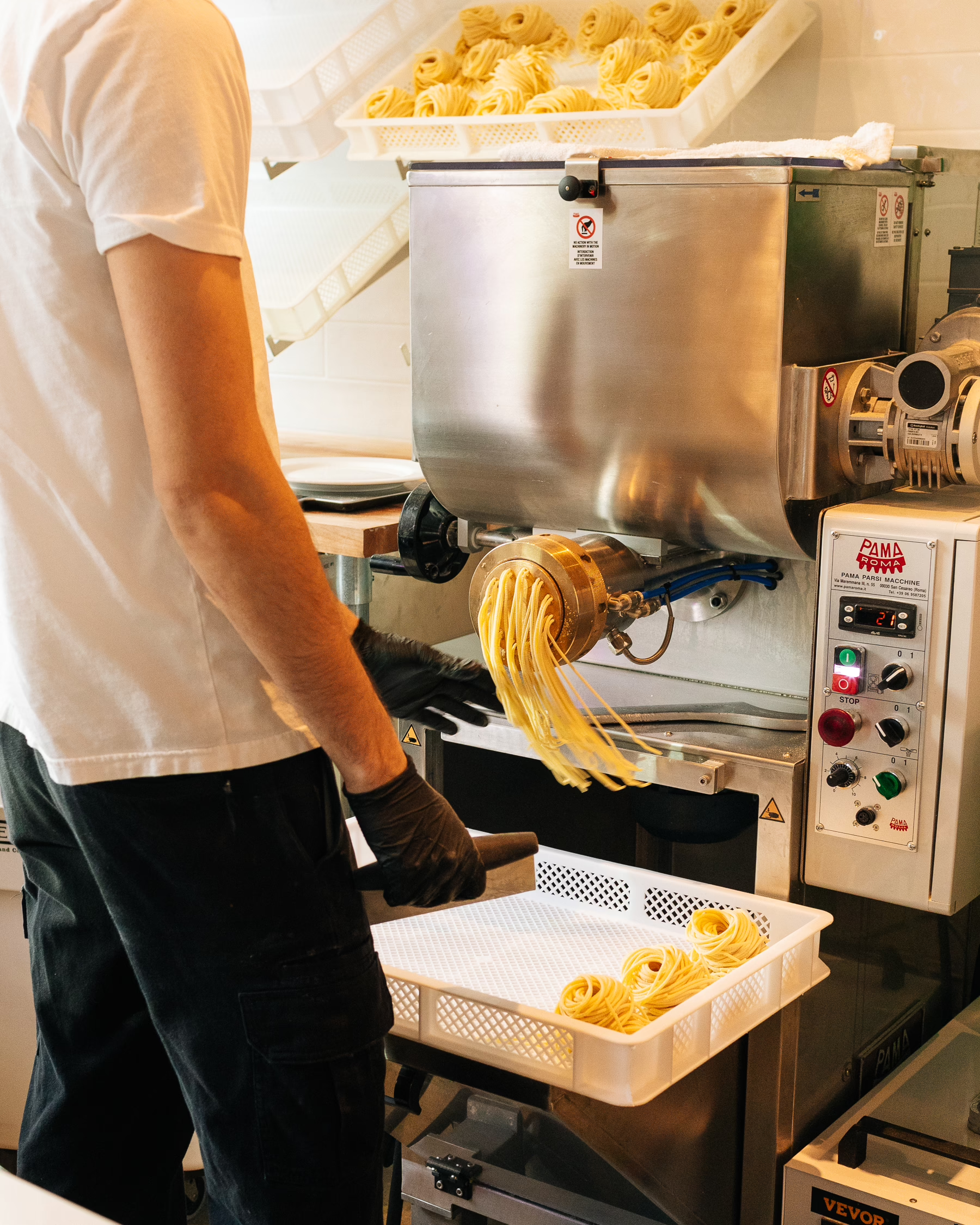
We make both kinds of fresh pasta in-house, every day. Our semolina pasta is extruded fresh, which gives it the firm bite of a good dried pasta with the tenderness of fresh. The shapes rotate often — casarecce, paccheri, bucatini and more take turns coming straight off the extruder to your bowl.
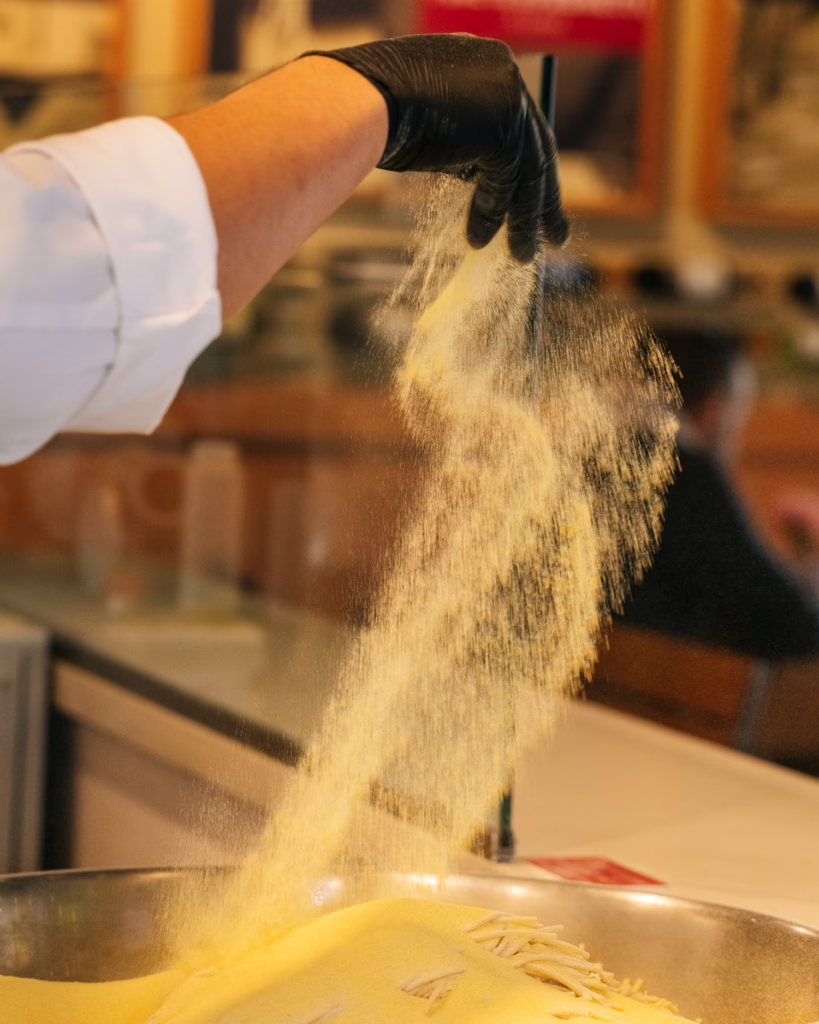
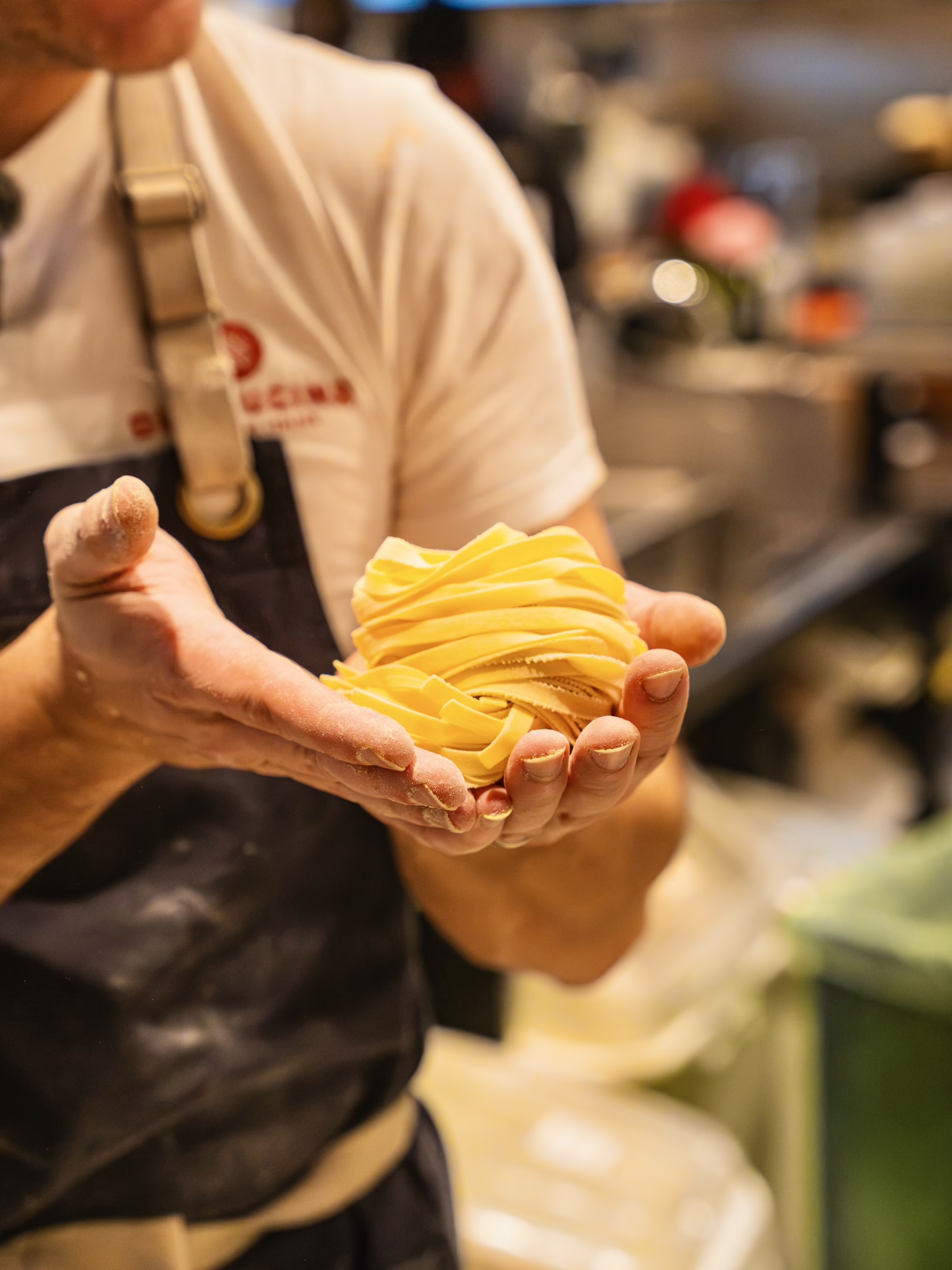
Our fresh egg dough becomes the northern classics: fettuccine, the sheets in our lasagna, and ravioli. Silky egg pasta for rich sauces, sturdy semolina shapes for bright ones — so each sauce gets the pasta it’s asking for.
Our pasta flour comes from Shepherd’s Grain, a collective of Pacific Northwest family farms growing identity-preserved wheat with regenerative practices, and it’s lab-tested below EU limits every six months.
Want it at home? Pick up a box of fresh casarecce, radiatori, fusilloni, spaghetti or egg-dough fettuccine at any Due’ Cucina, gluten-free casarecce included.