Rome doesn't have one signature pasta. It has four, and they're cousins. Carbonara, cacio e pepe, gricia and amatriciana are built from almost the same short list of ingredients. Learn one, and you understand them all.
1. One Pantry, Four Dishes
The Roman pasta pantry is small and stubborn:
- Pecorino Romano: A hard, salty sheep’s milk cheese. It’s the backbone of all four.
- Black pepper: Freshly cracked, often toasted first. Not a garnish — an ingredient.
- Guanciale: Cured pork cheek. Fattier and sweeter than pancetta, nothing like bacon.
- Pasta water: The starchy water that turns cheese and fat into a sauce.
Add eggs and you get carbonara. Add tomato and you get amatriciana. Take the pork away and you get cacio e pepe. Leave it as it is, and you have gricia.
2. The Family Tree
- Gricia: The ancestor. Guanciale, Pecorino Romano, black pepper. Often called “white amatriciana,” because it’s amatriciana before tomatoes arrived.
- Amatriciana: Gricia plus tomato. Named after Amatrice, a mountain town northeast of Rome. Romans love it on bucatini; Amatrice insists on spaghetti.
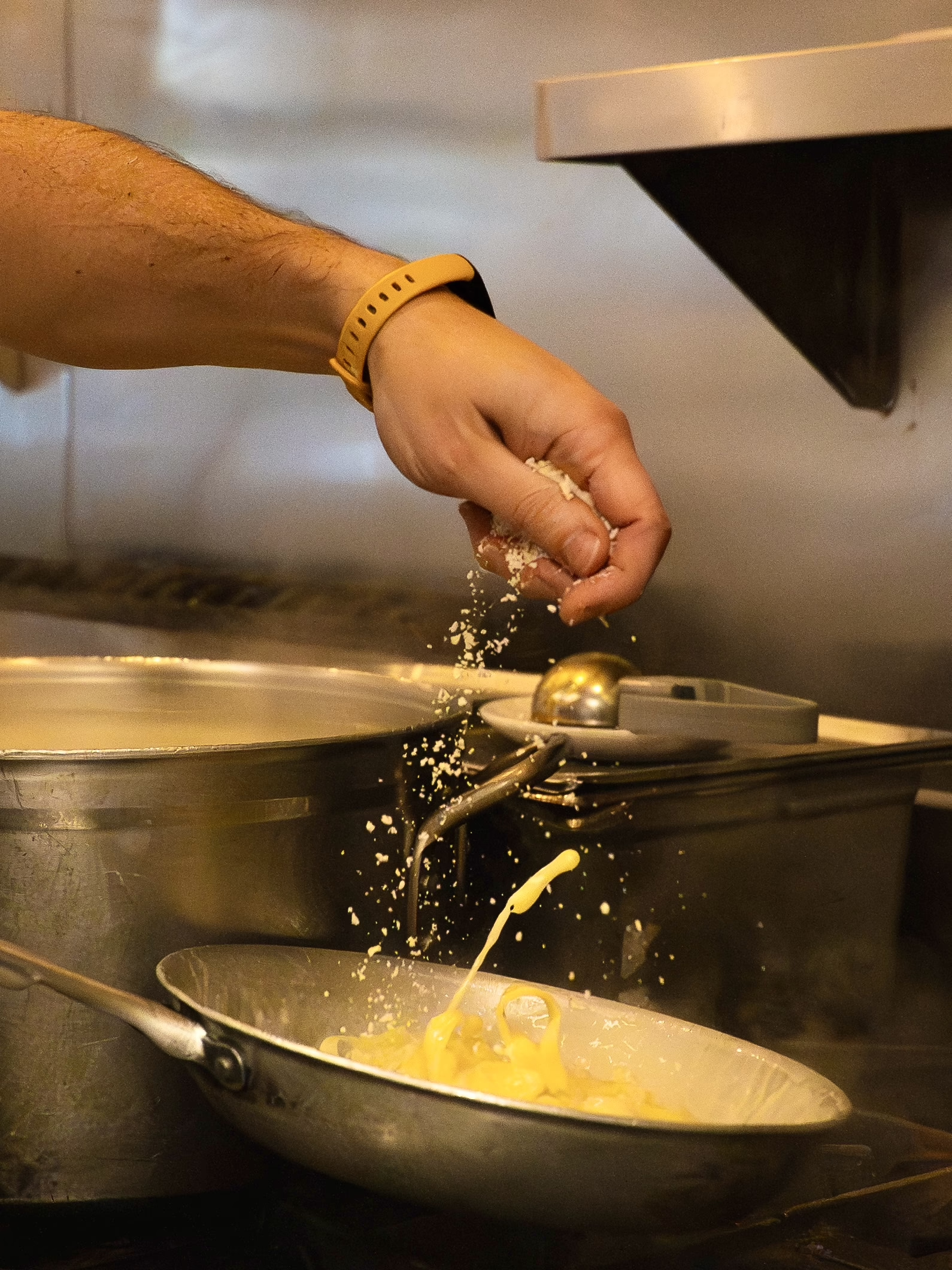
- Cacio e pepe: Just cheese and pepper, emulsified with pasta water into a creamy sauce with no cream at all. Three ingredients, zero places to hide.
- Carbonara: The youngest of the four. It first shows up in print after the Second World War. Egg yolks, guanciale, Pecorino Romano and pepper, tossed off the heat so the eggs turn silky instead of scrambled.
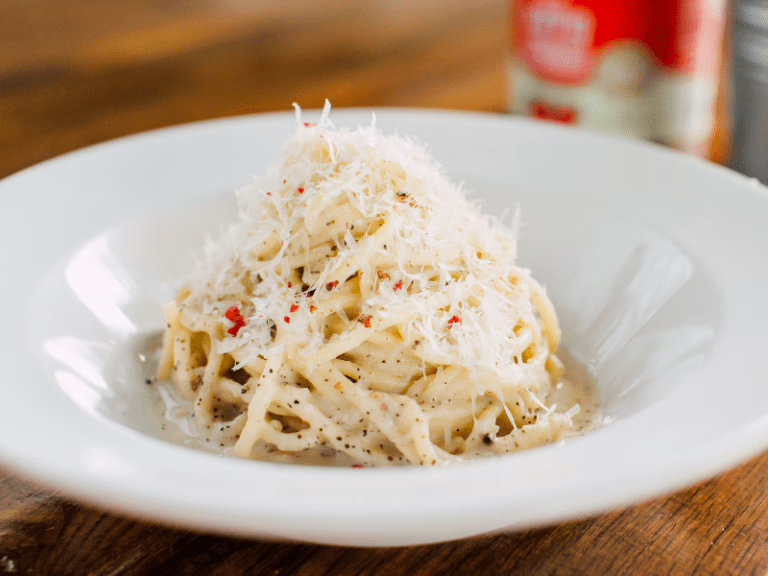
“Same pantry, different day. That’s Roman cooking.”
3. The Mistakes Rome Won't Forgive
- Cream in carbonara. The creaminess comes from egg, cheese and pasta water. Cream just mutes it.
- Bacon instead of guanciale. Smoked bacon overpowers the sauce. Guanciale melts into it.
- Parmesan instead of Pecorino. Parmigiano is a great cheese, but it’s from the north. These dishes want Pecorino’s salt and tang.
- Garlic, peas, onion, chicken. None of them belong. Rome keeps these dishes short on purpose.
- Too much heat. Cheese clumps and eggs scramble when the pan is too hot. Patience makes the sauce.
4. From Our Kitchen
All four Roman classics are available at Due’ Cucina. Carbonara and cacio e pepe are on the menu. Gricia and amatriciana live on our “secret” menu: you won’t see them on the board, but ask our team and they’ll tell you how to order them.
Our carbonara is made the Roman way: pasture-raised eggs, toasted Tellicherry pepper, house-cured guanciale and Pecorino Romano DOP. No cream, ever. Our cacio e pepe is creamy with no cream: 16-month Pecorino Romano DOP, 24-month Parmigiano Reggiano and Tellicherry and Sarawak white pepper, tossed with fresh pasta until it turns glossy. Our amatriciana and gricia start from the same house-cured guanciale, and the gricia is the one to try if you want to taste where it all began.
Our tip: our pasta shapes rotate often, so when bucatini is back on the line, order your carbonara on it. The hollow center catches extra sauce in every bite.