In America, "parmesan" often means any hard cheese in a shaker. In Italy, the cheese you grate over pasta is a decision. Parmigiano Reggiano and Pecorino Romano look alike in the bowl, but they taste completely different, and each one belongs to its own dishes.
1. Two Cheeses, Two Animals
- Parmigiano Reggiano DOP: Cow’s milk, made only in a small area of Emilia-Romagna and Lombardy, around Parma, Reggio Emilia, Modena, Bologna and Mantua. Aged at least 12 months, often 24 or more. Nutty, savory, a little sweet, with crunchy crystals.
- Pecorino Romano DOP: Sheep’s milk, made in Lazio, Sardinia and part of Tuscany. Saltier, sharper and tangier, with a clean, grassy bite.
- Grana Padano: Parmigiano’s milder cousin, from a wider area of northern Italy. Good, but softer in flavor.
The DOP seal means the cheese was made in its home region, following strict rules. If it isn’t on the rind, it isn’t the real thing.
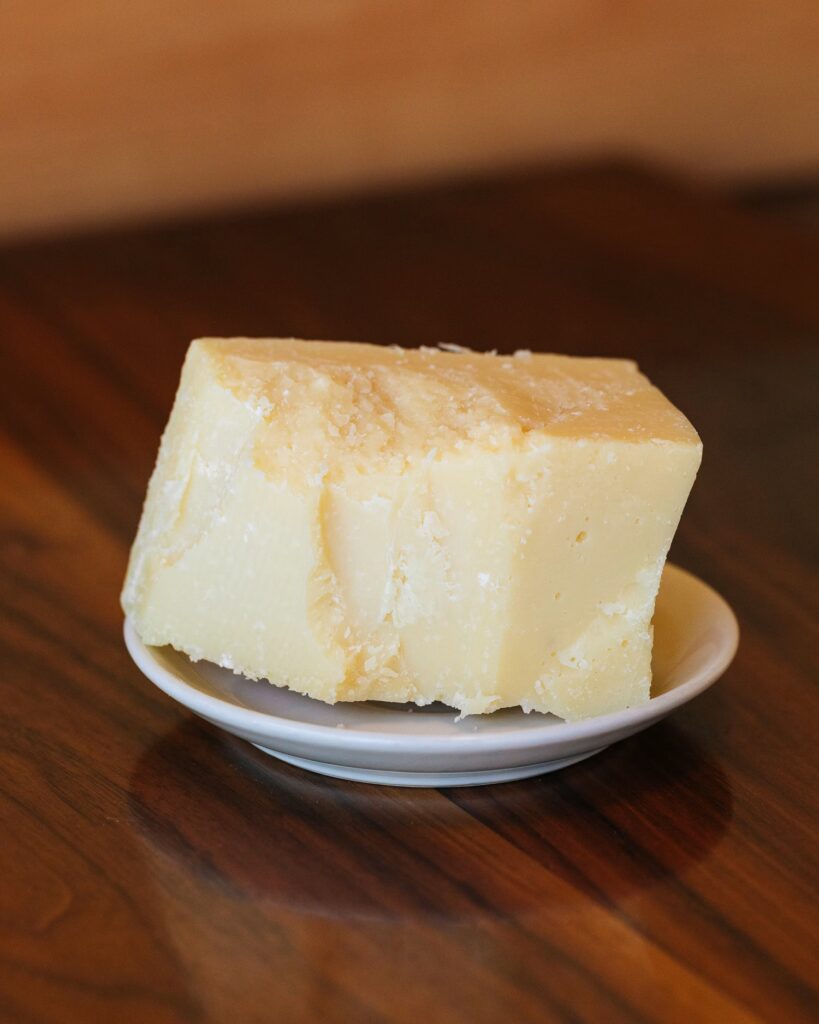
A note on rennet. Both cheeses are made with animal rennet, the natural enzyme that turns milk into curd. It’s part of the traditional method, and it’s written into each cheese’s official production specification, the rules every wheel must follow to be certified DOP. Parmigiano Reggiano must be coagulated exclusively with calf rennet; bacterial rennet is not allowed. Pecorino Romano is made with lamb rennet paste from animals raised in its own production area. A cheese made any other way can’t carry the name. That also means neither cheese is vegetarian in the strict sense. If you avoid animal rennet, ask us to leave the cheese off any dish, or choose dishes made with cheeses that don’t use it, like burrata, mozzarella and salted ricotta.
“Cow’s milk is round. Sheep’s milk bites.”
2. The Rule: Follow the Map
Match the cheese to where the dish comes from.
- Rome and central Italy → Pecorino Romano. Carbonara, cacio e pepe, gricia and amatriciana. These sauces are built on Pecorino’s salt.
- Emilia-Romagna and the north → Parmigiano Reggiano. Ragù alla bolognese, lasagne, tortellini, butter and sage. Its sweetness rounds out rich, slow-cooked sauces.
- Genoa → both. Classic pesto uses Parmigiano for depth and a sheep’s milk pecorino for sharpness.
- Vegetable pastas → your call. Parmigiano flatters sweet vegetables like squash and mushrooms. Pecorino stands up to bitter greens.
3. When the Answer Is No Cheese
- Seafood pasta. Most Italians won’t put cheese on clams or shrimp. It covers the taste of the sea.
- Aglio, olio e peperoncino. Garlic, oil and chili are the whole point. Some southern cooks add toasted breadcrumbs instead.
- Dishes already built on cheese. Cacio e pepe doesn’t need a topping. It already is the topping.
4. From Our Kitchen
We follow the map. Our carbonara and mushroom & white truffle are finished with Pecorino Romano DOP. Our Bolognese and polpette get Parmigiano Reggiano aged 24 months. Two dishes use both: our basil pesto, the Genoa way, and our cacio e pepe, where 16-month Pecorino Romano DOP meets 24-month Parmigiano. Each cheese goes where it’s right for the dish.
Want to go deeper on the king of cheeses? Read The Due’ Way: Parmigiano Reggiano DOP.